Key Takeaways
- Privacy fences can enhance security, reduce noise, and create a more comfortable outdoor living environment.
- Material options such as wood, vinyl, and composite fencing offer different benefits in terms of appearance, durability, and maintenance.
- Fence styles should complement the home’s architecture to improve overall curb appeal and property value.
- Landscaping, lighting, and decorative features can make a privacy fence more attractive and functional.
- Proper fence height, solid panels, and secure gates contribute to better privacy and protection.
- Regular maintenance helps extend the lifespan and appearance of fencing materials.
- Careful planning, budgeting, and compliance with local regulations are important for a successful fence installation project.
A privacy fence can do much more than mark property boundaries. The right fence can create a sense of security, reduce noise, improve outdoor comfort, and enhance the overall appearance of a home. For many homeowners, installing a privacy fence is one of the most effective ways to make outdoor spaces feel more private and inviting.
Today’s privacy fences are available in a wide variety of materials, styles, colors, and designs. Whether you prefer a traditional wooden fence, a modern horizontal design, or a low-maintenance vinyl option, there are many ways to combine privacy, security, and curb appeal in one project.
A thoughtfully designed fence can increase property value while helping homeowners enjoy their outdoor spaces with greater confidence and comfort. However, choosing the right fence requires more than simply selecting a material. Factors such as maintenance, neighborhood appearance, security needs, and landscaping should all be considered.
This guide explores privacy fence ideas that can improve both security and curb appeal while helping homeowners choose the best option for their property.
Why Install a Privacy Fence?
Privacy fences serve several important purposes.
Benefits may include:
- Increased privacy
- Improved security
- Noise reduction
- Better pet containment
- Enhanced outdoor comfort
- Improved curb appeal
Many homeowners install privacy fences to create a more relaxing outdoor environment while also improving the appearance of their property.
A well-designed fence can become an attractive extension of the home’s overall design.
Consider Your Main Goals
Before selecting a fence style, determine your priorities.
Ask yourself:
- Is privacy the main concern?
- Do you need improved security?
- Are pets involved?
- Do you want to reduce street noise?
- Is curb appeal the top priority?
Your goals will help determine the ideal fence height, material, and design.
Traditional Wood Privacy Fences
Wood remains one of the most popular privacy fence materials.
Advantages include:
- Natural appearance
- Design flexibility
- Customization options
- Wide availability
Wood fences can complement:
- Traditional homes
- Farmhouse designs
- Craftsman architecture
- Cottage-style properties
Popular wood choices include:
- Cedar
- Redwood
- Pressure-treated pine
Wood offers timeless appeal and can be stained or painted to match many home styles.
Board-on-Board Fencing
Board-on-board fencing is a popular option for homeowners seeking maximum privacy.
This design uses overlapping boards that eliminate gaps.
Benefits include:
- Improved privacy
- Enhanced durability
- Attractive appearance
- Better wind resistance
Board-on-board fences often look attractive from both sides, making them ideal for shared property lines.
Horizontal Privacy Fences
Horizontal fences have become increasingly popular in modern home design.
Characteristics include:
- Clean lines
- Contemporary appearance
- Visual width enhancement
Horizontal fences often make yards appear larger and more open.
Common materials include:
- Wood
- Composite
- Metal accents
This style works especially well with modern and contemporary homes.
Vinyl Privacy Fences
Vinyl fencing offers a low-maintenance alternative to wood.
Benefits include:
- No painting
- No staining
- Resistance to insects
- Long lifespan
Vinyl fences are available in:
- White
- Tan
- Gray
- Wood-look finishes
For homeowners who prefer minimal upkeep, vinyl can be an excellent option.
Composite Privacy Fences
Composite fencing combines wood fibers and synthetic materials.
Advantages include:
- Durability
- Low maintenance
- Resistance to rot
- Attractive appearance
Composite fencing often mimics natural wood while reducing maintenance requirements.
Although initial costs may be higher, long-term upkeep expenses are often lower.
Decorative Lattice Tops
Adding a lattice section to the top of a privacy fence can create a more decorative appearance.
Benefits include:
- Increased visual interest
- Additional height
- Improved airflow
- Support for climbing plants
Lattice details soften the appearance of solid fence panels while maintaining privacy.
Incorporate Landscaping Into the Design
A fence and landscape should work together.
Thoughtful landscaping can enhance:
- Privacy
- Beauty
- Security
Popular additions include:
- Shrubs
- Decorative grasses
- Flower beds
- Climbing vines
Combining plants with fencing often creates a more natural and inviting appearance.
Use Evergreen Plants for Extra Privacy
Evergreens can provide year-round screening.
Examples include:
- Arborvitae
- Juniper
- Holly
- Cypress
Planting evergreens along a fence line can increase privacy while adding visual appeal.
This combination often creates a softer and more attractive boundary.
Add Decorative Post Caps
Fence post caps are small details that can make a significant difference.
Popular options include:
- Solar lights
- Decorative metal caps
- Wooden caps
- Copper finishes
Post caps add character while improving the overall appearance of the fence.
Install Integrated Lighting
Fence lighting can improve both safety and aesthetics.
Popular lighting options include:
- Solar lights
- LED fixtures
- Path lighting
- Accent lighting
Benefits include:
- Improved visibility
- Enhanced security
- Increased curb appeal
Well-placed lighting makes outdoor spaces more enjoyable after dark.
Choose Colors That Complement Your Home
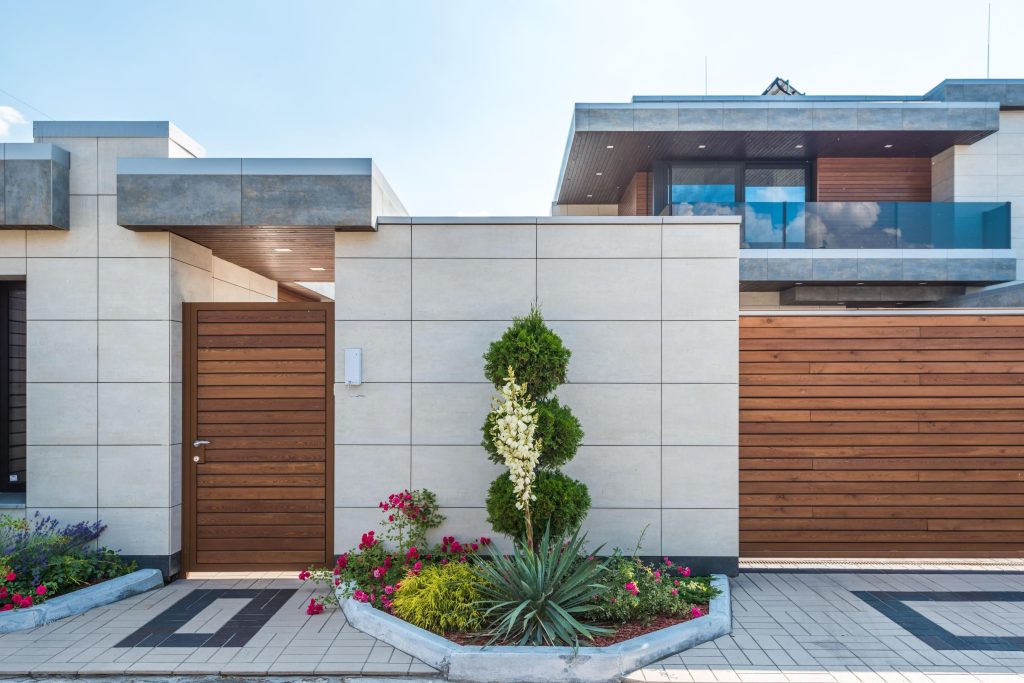
Fence color should coordinate with:
- Exterior paint
- Roofing
- Landscaping
- Architectural style
Popular fence colors include:
- Natural wood tones
- White
- Gray
- Black
- Dark brown
A cohesive color scheme creates a polished and attractive appearance.
Consider Fence Height Carefully
Most privacy fences range from:
- Six feet
- Eight feet
Higher fences provide more privacy but may:
- Increase costs
- Affect sightlines
- Require permits
Always review local regulations before choosing fence height.
Improve Security With Solid Panels
Solid fence panels provide better privacy and security than open designs.
Advantages include:
- Reduced visibility
- Improved property boundaries
- Greater deterrence
When security is a priority, solid-panel designs often perform best.
Reinforce Gates and Entry Points
A fence is only as secure as its gate.
Important gate features include:
- Quality hinges
- Secure latches
- Durable hardware
- Strong posts
Gate maintenance should also be part of long-term fence care.
Consider Metal Accents
Combining materials can create a custom appearance.
Examples include:
- Wood and steel
- Composite and aluminum
- Vinyl and decorative metal
Metal accents often add modern character while maintaining privacy.
Create a Backyard Retreat
Privacy fences help transform outdoor spaces into relaxing retreats.
Benefits include:
- Reduced distractions
- Greater comfort
- Better entertaining spaces
Adding features such as:
- Outdoor seating
- Fire pits
- Gardens
can further enhance enjoyment.
Use Fencing to Reduce Noise
While fences cannot eliminate all noise, they can help reduce sound levels.
Solid materials often perform better than open designs.
Noise reduction may improve:
- Relaxation
- Outdoor conversations
- Property enjoyment
Combining fences with landscaping can further improve results.
Match Fence Style to Home Architecture
The most attractive fences complement the home’s design.
Examples include:
Farmhouse Homes
- White fencing
- Board-and-batten designs
Modern Homes
- Horizontal fencing
- Dark finishes
Traditional Homes
- Classic wood designs
- Decorative details
Consistency helps improve curb appeal.
Protect Your Investment With Maintenance
All fences require some level of maintenance.
Wood Fence Maintenance
May include:
- Staining
- Painting
- Sealing
Vinyl Fence Maintenance
Typically requires:
- Occasional cleaning
Composite Fence Maintenance
May require:
- Periodic washing
Regular maintenance helps preserve appearance and longevity.
Think About Nearby Trees
Trees provide shade and beauty, but they can also affect fences.
Overhanging branches may:
- Scratch fence surfaces
- Drop debris
- Cause moisture buildup
Homeowners learning how to protect roofs from trees often discover that regular tree trimming can also help protect fences and other outdoor structures.
Maintaining healthy tree growth benefits the entire property.
Plan for Future Property Needs
A privacy fence should support long-term goals.
Consider:
- Growing families
- Pets
- Landscaping plans
- Future outdoor projects
Planning ahead helps prevent costly modifications later.
Understand Local Regulations
Fence regulations vary by location.
Rules may address:
- Height restrictions
- Property setbacks
- Permit requirements
- Material limitations
Always verify local requirements before installation begins.
Budget for the Entire Project
Fence costs involve more than materials.
Additional expenses may include:
- Labor
- Permits
- Gates
- Landscaping
- Lighting
Creating a complete budget helps avoid surprises.
Add Value to the Property
Many buyers appreciate privacy fencing.
Potential benefits include:
- Improved curb appeal
- Increased privacy
- Better security
- Enhanced outdoor living
A well-maintained fence can become a valuable selling feature.
Helpful Advice for New Homeowners
For many families, fencing projects become part of their first major home improvements.
Among the most useful first year tips for homeowners is evaluating privacy, security, and outdoor functionality early. Addressing these needs can improve comfort while helping establish long-term plans for property improvements.
A fence often serves as both a practical and aesthetic investment.
Avoid Common Fence Mistakes
Choosing the Wrong Material
Consider maintenance requirements before making a decision.
Ignoring Local Regulations
Permit issues can create costly delays.
Overlooking Landscaping
Fences look best when integrated into the overall landscape design.
Selecting Style Over Function
Balance appearance with practical needs.
Know When to Hire Professionals
While some homeowners install fences themselves, professional installation may be beneficial for:
- Large properties
- Uneven terrain
- Complex designs
- Security-focused projects
Professional installers can often ensure proper alignment, durability, and code compliance.
Final Thoughts
A privacy fence can dramatically improve both the security and curb appeal of a property. Whether you choose traditional wood, low-maintenance vinyl, durable composite materials, or a modern horizontal design, the right fence can create a more comfortable and attractive outdoor environment.
The most successful fencing projects balance privacy, security, aesthetics, maintenance requirements, and long-term value. By selecting materials and designs that complement the home while meeting practical needs, homeowners can create outdoor spaces that feel safe, inviting, and visually appealing.
With thoughtful planning, proper installation, and regular maintenance, a privacy fence can provide years of enjoyment while enhancing both property value and everyday quality of life.
